

Article
The Leadership Series: Sharon Callister, CEO of Mission Australia
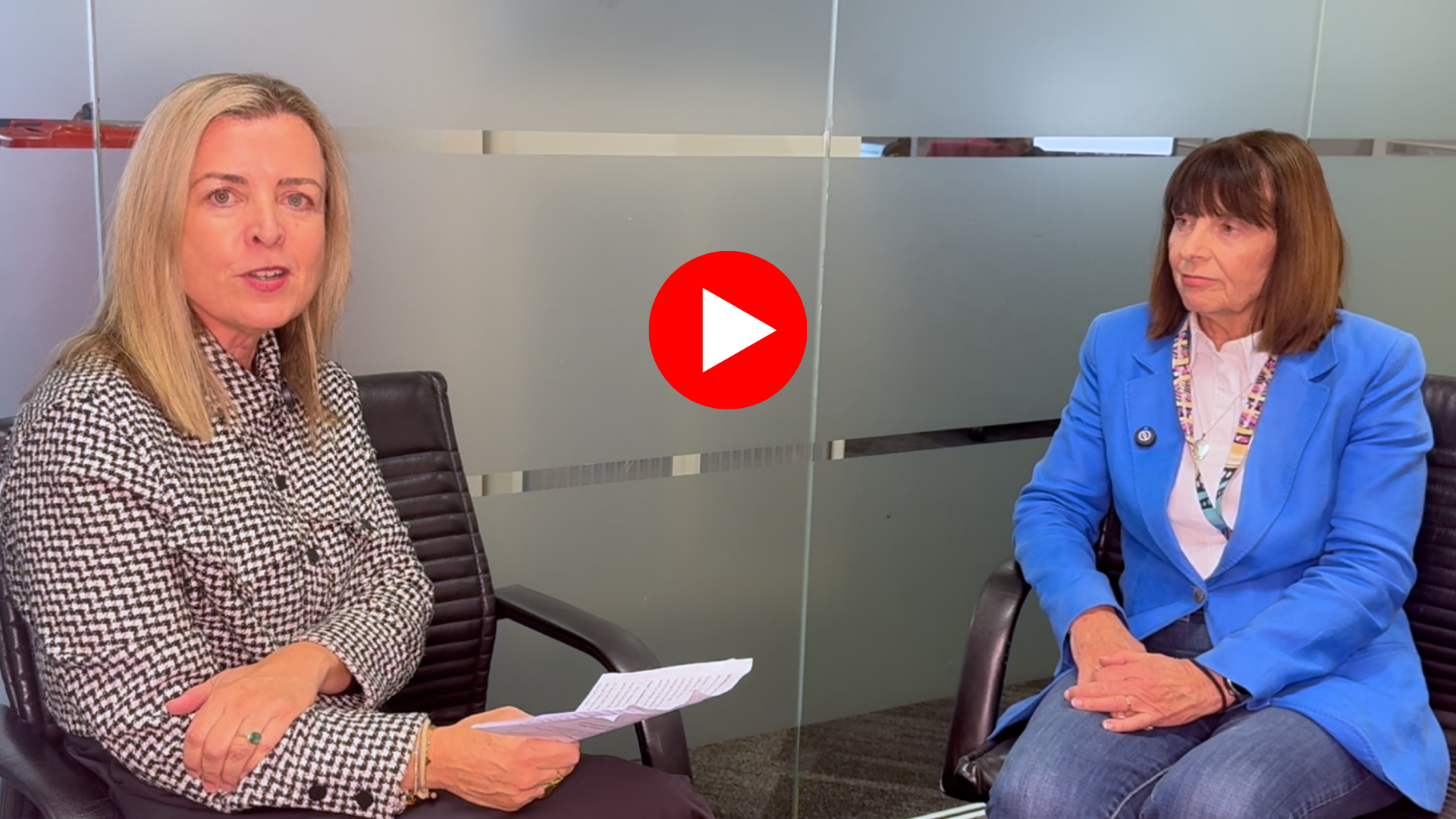
Sharon Callister, CEO of Mission Australia interviewed by Liska Turner, partner, Executive Search
The Leadership Series
At Beaumont Executive, we know that appointing an outstanding leader is only the beginning. True success lies in how well they integrate into the organisation, thrive and deliver long-term impact. That is why we created The Leadership Series, contributing to the for-purpose leadership conversation by sharing insights from exceptional leaders. Hosted by our Executive Search Partner, Liska Turner, the series features interviews with inspiring leaders who are shaping impact-driven organisations.
Liska Turner with Sharon Callister, CEO of Mission Australia
Sharon Callister joined Mission Australia as CEO in 2022, following a career leading large and complex organisations across health administration, aged care, education and community services.
Throughout that journey, Sharon’s approach to leadership has been informed by her personal values, the diverse environments in which she has worked and the leaders she has encountered along the way.
In this conversation for The Leadership Series, Sharon reflects on the distinct responsibility of being a CEO, the importance of making difficult decisions at the right time, and how leaders can build cultures where accountability and respect work together.
She also shares why discipline and boundaries are among the most underrated aspects of leadership, and why connecting people to an organisation’s purpose is essential to achieving meaningful outcomes.
Watch the full interview here or read the article below to discover Sharon's perspectives on leadership, from making difficult decisions and building strong cultures to creating the discipline and space to lead effectively.
Learning from every kind of leader
For Sharon, leadership has not been shaped by one defining experience. Instead, it has developed through the different organisations, sectors and working relationships she has encountered throughout her career.
Her personal values provide an important foundation, helping her understand what matters to her, what she respects in others and the environments in which she can contribute most effectively.
Working under a range of leaders has also offered valuable lessons. Some were exceptional, while others had approaches that did not align as closely with Sharon’s own values or working style.
Both experiences were instructive.
“I think I’ve learnt as much from those leaders about what I don’t want to see in my own leadership journey as I have from having really fantastic leaders,” she says.
Those contrasting experiences helped Sharon recognise the behaviours that allow people to improve, contribute and feel valued, as well as those that can have the opposite effect.
When the responsibility sits with you
Before becoming a CEO, Sharon spent many years as an executive reporting to one. At the time, she believed that experience had prepared her well for the top job.
Stepping into the CEO role revealed just how different the responsibility could be.
“When you step into the CEO role, the buck stops with you,” she explains.
Every significant decision carries a level of personal accountability. Even when an issue has been debated thoroughly with an executive team or discussed individually with colleagues, the CEO remains ultimately responsible for the outcome.
Sharon also became acutely aware of the visibility that comes with the position. A CEO may not know every person within a large organisation, but employees generally know who the CEO is and pay attention to how they interact with others.
A single conversation can shape someone’s perception of their leader.
For Sharon, this makes being genuine and present particularly important. She makes a conscious effort to speak with employees, spend time listening to them and ensure that people do not feel invisible simply because the CEO has other competing priorities.
Making difficult decisions at the right time
Difficult decisions are an unavoidable part of leadership. They may create disappointment or disengagement for some people, but avoiding them rarely resolves the underlying issue.
Sharon believes leaders need the courage to make a difficult decision when it needs to be made.
“If you have to make a difficult decision, make it when you should make it. Don’t let things linger,” she says.
Silence does not mean an unresolved issue has disappeared. Delaying a necessary decision can instead affect people’s confidence in their leader and allow uncertainty to continue.
Looking back, Sharon applies this lesson to her own career as well. There have been organisations where she was a strong fit and others where she feels she may have stayed longer than was right for her.
Knowing when to move on can require the same courage as making a difficult organisational decision.
With experience, leaders can become more comfortable backing their judgement. But courage alone is not enough. Sharon believes difficult messages should be communicated clearly, strongly and respectfully.
People may not agree with every outcome, but they are more likely to understand it when the leader is straightforward about the decision and treats those affected with respect.
Building trust without pretending to have every answer
When Sharon joined Mission Australia, she inherited an executive team with extensive institutional knowledge.
Rather than presenting herself as a subject matter expert in every part of the organisation, she was open about what she did and did not know.
“I’m not going to pretend I know what you do from day one, because I don’t,” she recalls telling her team. “But I’m also really comfortable to say: this is how I lead, this is my leadership style.”
Her early conversations with individual executives focused on understanding their work, the challenges they faced and what excited them about their roles.
She also wanted to understand how they saw their contribution around the executive table. Were there existing tensions or barriers? Did people feel safe expressing an unpopular view?
By having these conversations openly, Sharon and her executives could learn how one another worked and begin building trust.
That trust became particularly important as the organisation undertook structural changes and developed Strategy 2030, which Sharon describes as an ambitious plan supported by clear, quantifiable outcomes.
For a long-tenured leadership team, change and challenge can also help prevent experience from becoming complacency.
Sharon expects a high standard of accountability, but balances it with recognition, appreciation and respect. Her executives understand what is expected of them, while also knowing their experience and contribution are valued.
Culture must be active
Mission Australia’s leadership culture draws on a servant leadership approach.
Sharon is clear that servant leadership is not simply about being agreeable or avoiding difficult conversations. It means listening to people, leading with humility, empathy and respect, and still holding one another accountable for delivering the work.
When something is not going as it should, leaders need to be prepared to address it.
This philosophy is reflected around the executive table. Executives are expected to think about Mission Australia as a whole, rather than advocating only for their own functional areas.
To encourage different perspectives, the team regularly uses de Bono’s Six Thinking Hats. Participants may be allocated a particular viewpoint before a discussion and asked to represent it, regardless of whether it reflects their natural position.
The executive team has also created six personas representing broad client experiences across Mission Australia. These personas help leaders test decisions through the perspective of the people the organisation serves, including those experiencing homelessness and requiring significant ongoing support.
These practices make culture more than a set of values displayed on a wall.
Culture becomes active. It is incorporated into meeting structures, leadership development, decision-making and the conversations leaders have when holding themselves and others accountable.
“It’s embedded, but it’s active,” Sharon reflects during the conversation.
Supporting people through demanding work
Mission Australia’s employees often work alongside people experiencing extremely difficult periods in their lives. That work can be demanding, particularly when combined with wider organisational and societal pressures.
Sharon believes it is important to recognise these challenges and give employees opportunities to debrief and access support.
At the same time, she sees the meaningful outcomes employees help create as an important source of motivation. A difficult day can look different when someone has helped a client enter their first home or access support that was previously unavailable.
Celebrating those moments helps people stay connected to the difference their work makes.
Mission Australia’s Celebrate Awards program is one way the organisation formally recognises employee contributions. The value is not primarily in the reward itself, Sharon explains, but in ensuring people know their efforts have been seen and appreciated.
Employee wellbeing also includes paying attention to leave and encouraging people to take responsibility for their own health.
Leaders have a role in creating supportive working conditions, but Sharon views wellbeing as a shared responsibility. The organisation must value it, and employees must also take action to look after themselves.
“It’s a two-way process,” she says.
The underrated value of discipline and boundaries
Asked which aspect of leadership is most underrated, Sharon identifies two closely connected qualities: discipline and boundaries.
For her, these are the foundations that allow her to perform effectively in a demanding role.
Regular exercise plays an important part in maintaining her physical and mental wellbeing. Whether it is running, swimming or walking, Sharon prioritises fitting movement into her day alongside her work and family commitments.
Without discipline and clear boundaries around these different parts of her life, she does not believe she could reach her potential as a leader.
Sharon has seen people spend extremely long hours at their desks without necessarily being as productive as they could be. She does not view routinely working 12 to 15-hour days as a sign of success.
Instead, she encourages leaders to ask why those hours have become necessary. Is there an issue with productivity? Is fear driving the behaviour? Or has a previous working environment created the belief that constant visibility is expected?
Mission Australia asks its leaders for high standards, genuine commitment and a strong connection to purpose. It does not ask them to sacrifice every other part of their lives to demonstrate their value.
By maintaining her own boundaries, Sharon also recognises that she is modelling behaviour for her executive team. When senior leaders demonstrate healthy, sustainable working practices, those behaviours can influence the broader organisation.
Creating time to think
Sharon’s belief in discipline and boundaries is also reflected in one of the leadership books that has recently resonated with her: A Minute to Think by Juliet Funt.
The book explores the importance of creating “white space”, allowing enough time within the working day to step back, think and consider what you are doing.
For Sharon, that space rarely appears on its own. If necessary, it must be deliberately scheduled.
Her leadership team has also explored the book together, creating an opportunity to reflect collectively on its ideas.
In roles filled with urgent demands and competing priorities, creating thinking time can feel difficult. Yet it is precisely this discipline that can help leaders make considered decisions rather than simply moving from one immediate task to the next.
Connecting people, culture and purpose
When asked what ultimately determines whether a leader will succeed, Sharon returns to culture.
Technical ability and communication skills are important, but they are not enough on their own. Leaders must be able to connect with people, motivate them and help them understand how their work contributes to the organisation’s purpose.
“You’ve got to get people absolutely in tune with you so that you’re all focused on the same thing,” she says.
Across Sharon’s leadership journey, that connection is reinforced through accountability, clarity and respect. It appears in the willingness to make difficult decisions, the humility to acknowledge what she does not know and the discipline to model sustainable ways of working.
Her approach offers a clear reminder that strong leadership is not built on having every answer. It is built on creating the conditions in which people can speak honestly, challenge constructively and remain connected to the outcomes they are working together to achieve.
Leadership in three ideas
For Sharon, the key themes are clear:
Exercise, to remain physically and mentally prepared for the demands of leadership.
Time to think, to create enough space for considered decisions and reflection.
Culture, to connect people with one another and with the purpose of the organisation.
Together, they reflect a leadership philosophy grounded in personal discipline, collective accountability and a genuine respect for people.
share this
Related Articles