

Article
A Leadership Conversation with David Spriggs
(By Alma Raheem)
David Spriggs has been part of Infoxchange for 17 years, with his connection to the organisation stretching back even further through almost a decade of volunteering.
As CEO, David leads an organisation sitting at the intersection of technology and social justice, working with not-for-profits, government, corporate partners and communities to use technology to improve access to services and create better outcomes for people experiencing disadvantage.
David joined Infoxchange in an operational leadership capacity before stepping into the CEO position a few years later. Since then, he has deliberately reshaped where he spends his time and where he believes he can contribute most.
Our conversation moved from that leadership evolution into a broader discussion about the sector: why collaboration is becoming increasingly important, what he looks for when appointing leaders, how AI could help organisations respond differently to growing community need, and why lived experience needs to remain central to decision-making.
We also spoke about something particularly relevant for aspiring CEOs: understanding what the role actually requires and being clear about why you want it in the first place.
I’ve included a few questions throughout to invite further reflection on these themes.
Looking Outwards: Leadership Through Partnership
One of the biggest shifts in David’s leadership has been where he spends his time.
His earlier roles at Infoxchange were much more operational and internally focused. Today, he deliberately spends more time externally: building relationships with government, sector leaders, universities, corporate organisations and technology partners.
That shift has been possible because of the leadership team around him. With strong executives driving strategy and execution internally, David has greater capacity to look outwards and bring those relationships and insights back into Infoxchange.
It also reflects something central to his philosophy: put the purpose above the organisation.
Coming from the technology sector, David expected the not-for-profit sector to be highly collaborative. Instead, he found that limited funding can inevitably create competition between organisations working towards similar outcomes.
Yet the problems the sector is trying to solve rarely sit neatly within one organisation.
David believes there is significant opportunity to bring together not-for-profits, government, businesses and technology partners around shared challenges. Rather than asking who owns the solution, perhaps the better question is: who needs to be part of it?
As community demand continues to grow, this kind of collaboration may become increasingly important to how the sector responds.
Questions to consider
- Where are the relationships outside your organisation that could strengthen its impact?
- Who isn't currently at the table that perhaps should be?
- What would putting purpose above organisational boundaries look like for your organisation?
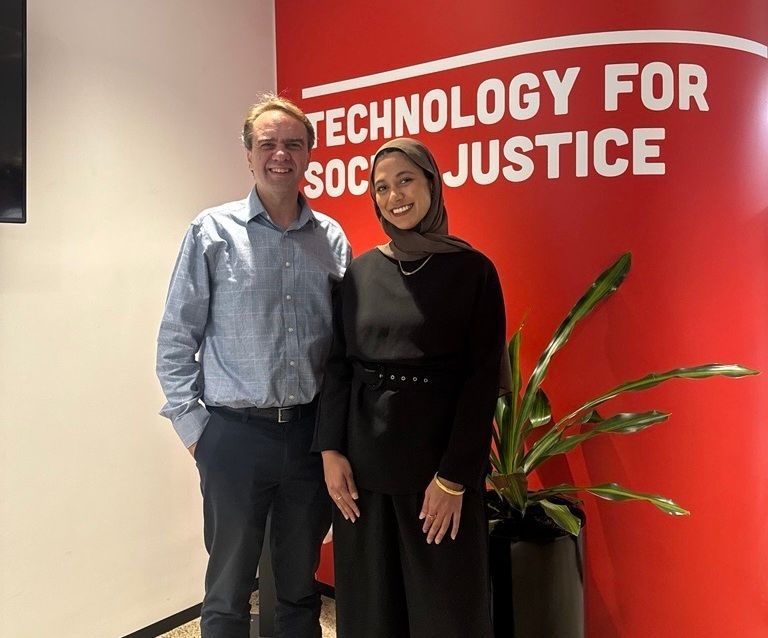
David Spriggs and Alma Raheem
Hiring for What Someone Can Become
When David spoke about building his executive team, I was interested in how he thinks about experience and potential.
Skills and experience matter, but once candidates meet that threshold, he looks further. David wants people with enough experience to contribute, but also enough stretch in the opportunity for them to grow.
Rather than always appointing someone who has already done exactly the same role, he considers whether their experience is transferable, whether they have drive, whether they genuinely connect with the purpose and what they could become over time.
It is a perspective that resonates with my work in Executive Search. There can be a tendency to look for an exact replica of what has come before. David’s approach is a useful reminder that experience matters, but so does trajectory.
His own career reflects this. David moved from technology into the not-for-profit sector and later from operational leadership into the CEO role. For people making similar transitions, he spoke about the value of mentorship and having someone outside the organisation with whom you can test ideas and gain perspective.
For anyone aspiring to become a CEO, his starting question is: why do you want it?
David describes CEO leadership in the not-for-profit sector fundamentally as a role of service: to your people, your community and the stakeholders around you. It can involve significant advocacy, fundraising, partnerships and external engagement.
For those coming from the corporate sector, his advice is also to understand the environment you are entering. Purpose doesn't mean an easier pace, and understanding the organisation's funding model, culture and Board is critical. David particularly emphasised the impact a strong Board and effective CEO-Chair relationship can have on a CEO’s ability to lead.
Questions to consider
- When assessing talent, how much weight do you give to potential as well as experience?
- What capability from your current career could translate into a different environment?
- If CEO is your ambition, what is it about the role itself (rather than the title) that you want?
Start With the Problem, Not the AI
David describes himself as an AI optimist and sees significant potential for technology to help the sector respond to increasing community need.
But his starting principle is clear: start with the problem you are trying to solve, not with AI as the solution.
Ask Izzy, Infoxchange’s platform connecting people with support services, is a great example. The team has been exploring how voice-based AI could allow someone to explain what they need in their own words and language, making it easier to connect with appropriate support.
David also shared the example of Wombat Housing’s “Wombot”, an AI chatbot helping reduce some of the barriers young people experiencing homelessness may feel when first reaching out for support.
The intention isn't to replace human connection. It is to use technology to make that connection easier to access.
Importantly, David’s perspective on technology remains grounded in lived experience.
When Ask Izzy was originally being developed, people within the sector suggested names explicitly referencing homelessness. People with lived experience offered a different perspective. Not everyone experiencing housing insecurity identifies as homeless, and the stigma attached to the word could itself become a barrier to seeking support.
Their input changed the approach and has continued to inform the service throughout its development.
For David, there is a broader leadership lesson here: listen widely and become comfortable with ambiguity. People with lived experience, frontline teams, government, funders and sector leaders may all see the same issue differently.
Leadership doesn't always mean having one clear answer. Sometimes it means listening to those perspectives and making the best decision you can within the grey.
Questions to consider
- Is your organisation starting with the problem, or starting with the technology?
- Are the people affected by your decisions involved early enough in shaping them?
- How comfortable are you leading when there isn't one clear answer?
Final Reflections
David’s perspective left me thinking about what it means to lead beyond the boundaries of your own organisation.
Build an executive team you can trust so you have the capacity to look further out. Bring different sectors together rather than assuming your organisation needs to hold the entire solution. Recruit people for where they could go, not simply where they have been. Use technology to remove barriers, while designing it alongside the people it is intended to support.
And through all of it, keep returning to purpose.
For aspiring CEOs, David’s question of why is worth considering. The CEO role brings significant influence and opportunity, but in the for-purpose sector it is fundamentally one of service. Understanding the organisation, its Board, its community and what the role will actually ask of you is just as important as deciding whether you are ready to lead it.
My sincere thanks to David for being so generous with his experience and perspectives, and for a thoughtful conversation about leadership, technology and what greater collaboration could make possible across our sector.
Alma Raheem, Associate Partner, Executive Search
share this
Related Articles